June 11, 2010

Cinque Terre, Italy


The five villages along the Ligurian coastline make up the Cinque Terre National Park that is designated an UNESCO Heritage Site for man's adaptation of the steep and uneven landscape into habitable towns and the farming of the micro-climate to produce a microcosm where man has lived for the past 1000 years.

The five villages are connected by train (approximately 4 minutes apart), by boat (when the weather cooperates) and by overland hiking trails (when not washed out).

From north to south, the villages are:

Monterosso al Mare - the flattest of the five, with an old and new town. The largest beach area which is enjoyed by all five villages.


Vernazza - the only one with a natural harbour.


Corniglia - the only one with no ocean access. Narrow streets and the reward for climbing to the top of the hill - gelato!
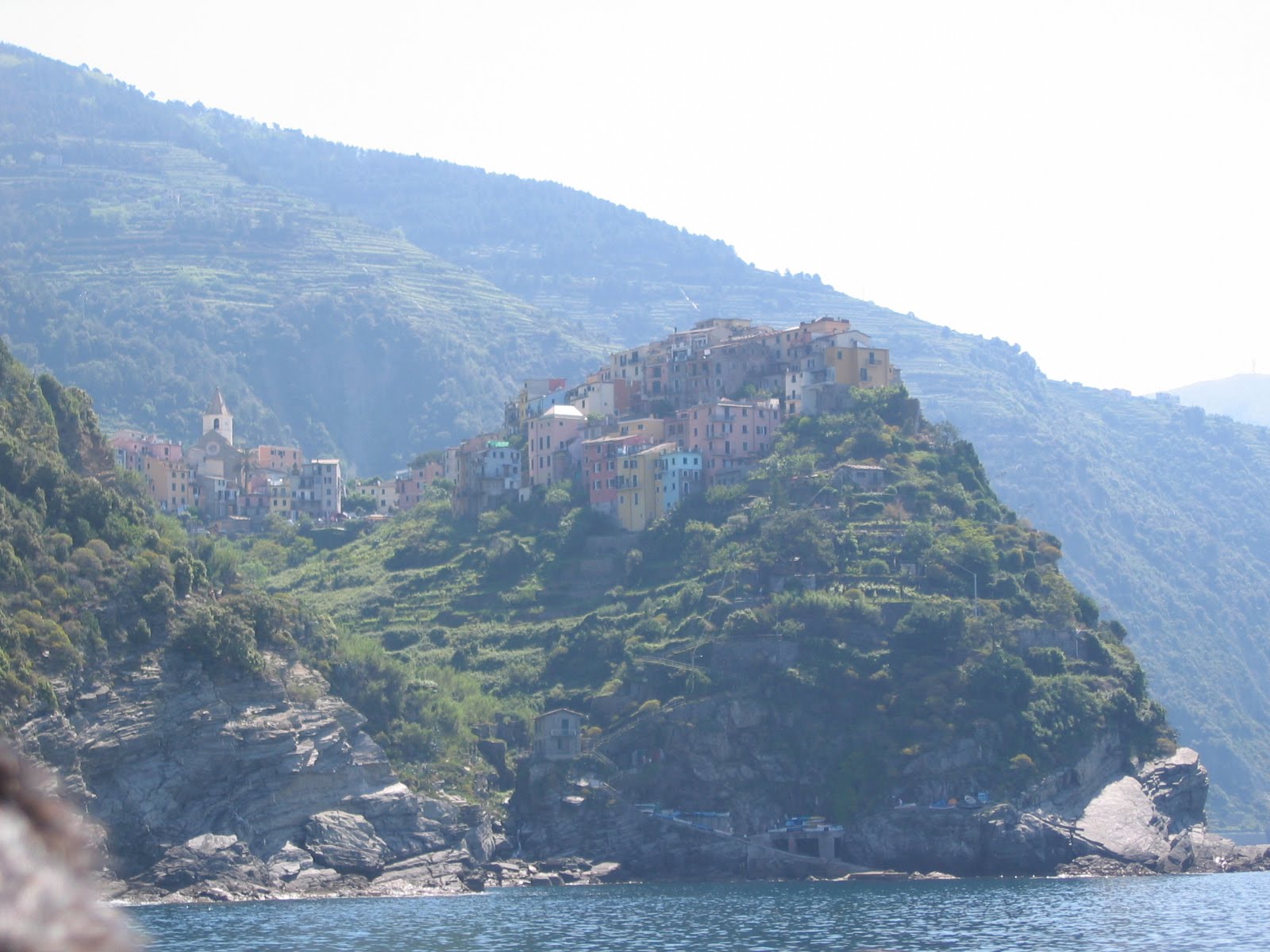

Manarola - the hills above each town are terraced and covered with the villagers' crops. These include olive trees, grape vines, citrus (lemon, lime, orange, grapefruit) trees, vegetable gardens, herbs, fruit trees, and much more.


and Riomaggiore


From Riomaggiore to Manarola was the famed "walk of love" or Via Dell' Amore, the gentlest of the connecting village walks that is wide enough for strollers. The entrance gate is marked by intertwined hearts and initials are carved into any available surfaces (stone, cactus, cement wall). One shelter area was covered in graffiti. And the definitive symbol for this walk is the two figures, with the wires around them covered with hundreds and hundreds of locks. These symbolize loving couples with their initials etched or written onto them before being locked onto any wire along the way.


The next walk from Manarola to Corniglia was a little more strenuous and narrower. Notice the metal netting on the cliff sides to prevent boulders falling. Unfortunately the other two trails connecting the next towns were closed for maintenance because of earlier landslides.


This area of Italy had been recommended to me for years and we were glad we included it into our itinerary. We had three relaxing days to wander between towns and savour the seaside life. Amazing seafood on the menus and pesto is famous here, with each family having a secret recipe!

June 09, 2010

Pisa and the Field of Miracles, Italy

Leaving Florence and heading west to the coast we went past Pisa and decided to take in the famous 'Field of Miracles' or Campo dei Miracoli. The walled off grassed area contains the infamous Leaning Tower plus the 1000 year old Cathedral and the slightly younger Baptistery, along with Camposanto Monumentale (monumental cemetery).


Pisa is a university town and the first lawn (the only one people are allowed on) was covered with students playing soccer and frisbee. The tourists join them with their lunches and little kids burning off excess energy.


There is no getting around it - it is an impressive site!


Read this link for more historical information on building dates and repairs attempted to fix the lean.

June 06, 2010

Bella Firenze, Italy

After a rainy day driving further north, we moved on to Florence - the capital of the Renaissance - widely considered one of the most beautiful cities in the world.


As soon as we got into town we had an appointment with the Uffizi Gallery, Florence's most important collection of art. Unfortunately one cannot take photos there but it is filled with works by Botticelli, Raphael, Titian, Caravaffio, Michelangelo, Durer and Rembrandt. However we did get this shot of the famous Ponte Vecchio bridge and the next four bridges across the Arno River from one of the terraces up high.


The 14th century Duomo of Florence: Santa Maria del Fiore. Awe inspiring!


Our wonderful hotel, one block from the Vecchio Bridge and the Uffizi on a very quiet side street, has the tallest privately owned tower in Florence. These shots are of the cities rooftops from it, with the Duomo and Uffizi Palace in the background.


Popping your head into the courtyard of the Uffizi Palace is definitely a worthwhile thing to do:


Florence is famous for leather. Every store you past, on the streets or in the markets, is filled with leather goods - purses, coast, belts...


And what is with all these locks?? Check the Cinque Terre posting to understand why one sees them locked onto surfaces everywhere.

June 03, 2010

ARRIVEDERCI ROMA - onto Tuscany

TUSCANY AND THE GOLDEN SUN
Well, not this Tuscany, but it does have that reputation. With our one day less in this area we tried not to jam the rest of the days full, but to take the time to appreciate where we are. In Siena we sat on Il Compo in a sidewalk cafe eating local panforte and other goodies. In Montelcino we drank the famous wines and enjoyed the few rays of sun poking through the clouds. In Pienza we toured the UNESCO Heritage Site of Pope Pius’s home. And then returned back to our base town of Montepulciano which was enshroud in fog from the low lying clouds...

After leaving Calgary on Saturday, we finally left Rome on Thursday (in our original clothes) and drove north to Montepulciano, one of Tuscany's famous hilltop towns.

Driving through Tuscany:

One suitcase was waiting for us there! Hooray!!! Back onto the phone asking about #2 and within 30 minutes of us arriving, it did too! That was great until I opened it and found that it had been secretly slashed through a front pocket into the body. My saving grace was my packing; in that my canvas hat, then my pillow covered all my clothes and goods (each in Rick Steves packing cubes) so that nothing could be snatched quickly. So nothing missing, but a big slice through the front, inside one of the outside pockets.

As a consolation the meal that first night in Montepulciano was the best I have had so far – pasta with black truffles and caramel panna cotta for dessert – amazing excitement in my mouth. Now I understand all the fuss about truffles!! Disappointing food in Rome, so looking forward to more Tuscany delicacies!

Over the next couple of days we visited Siena - the cultural competition to Florence in the arts in the 13th and 14th century. The 'centro' (centre of town) is a UNESCO Heritage Site.

First view of Siena's Piazza del Campo, then the entrance onto it. Most famous for the horse races between the nine wards of the state that occur twice a year - the Palio. Read link for more information.

The Siena Cathedral, known as the Duomo, and it's wonderful tower. A Gothic masterpiece:

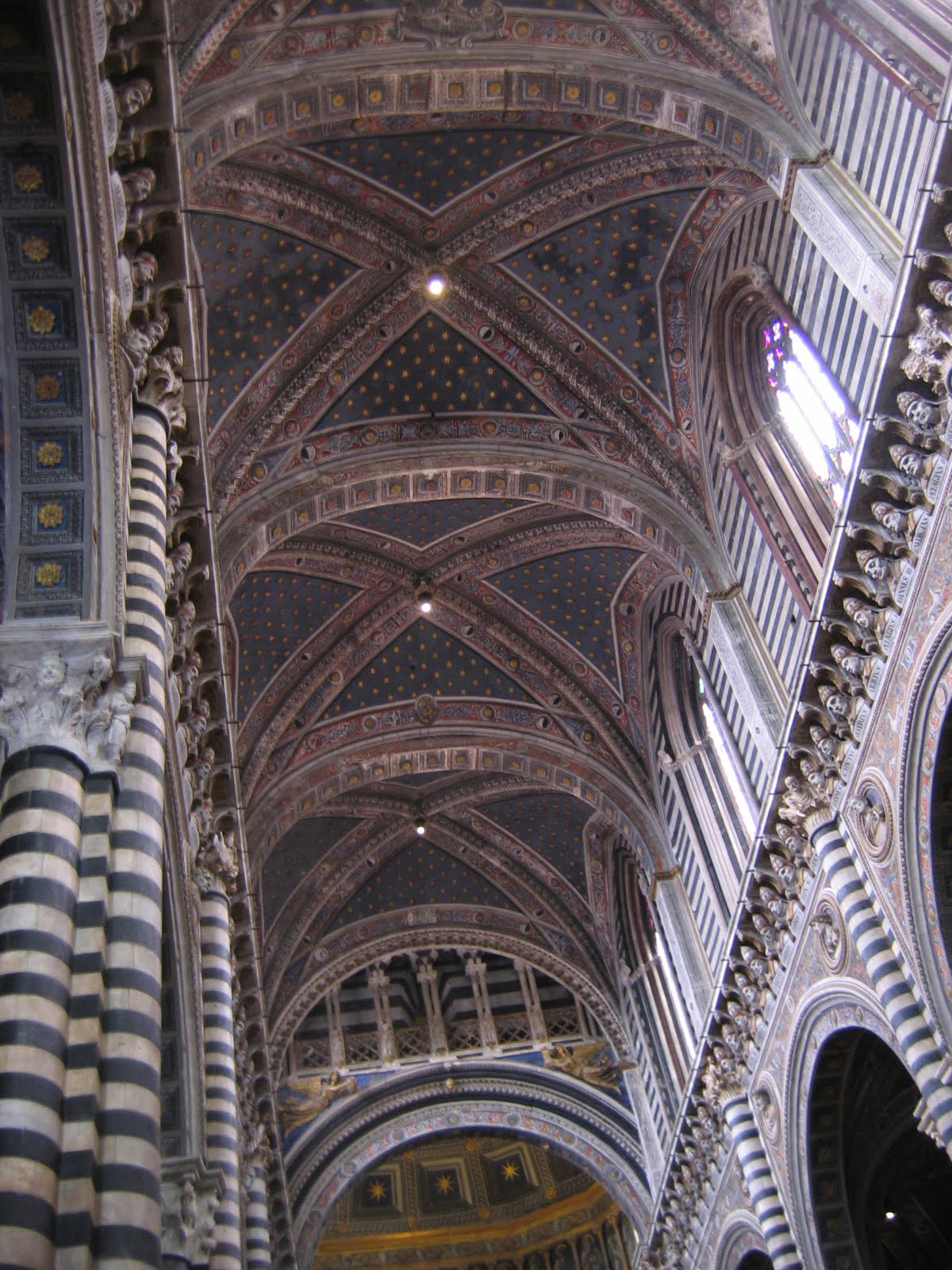
Inside the Duomo:

Onto Montalcino, famous for its locally produced wines. But we found all the excitement was for the Giro d'Italia that would be coming through town the next day. This bike race through the entire country rivals the Tour de France in Europe. Every shop window was decorated in a bicycle theme:

And Pienza, again the town centre is a UNESCO Heritage Site, is a perfect Renaissance town. Read more about its history here. We did tour Pope Pius II summer home but again, no photos were allowed.

Related Posts Plugin for WordPress, Blogger...